


Red is the rose that blooms sae braw
Where yorlins sing sae clearly,
Grey is the cross that's shorn in twa',
Where yince we loo'ed sae dearly.
Dark the poor (muir?) by Ninestane Burn
Where martlets sing sae sweetly.
Dark are the men wi' pinards nine
Where laverocks sing sae dearly.
They cut him doon by Ninestane Burn.
The pinards flash sae deadly!
They left him lying 'alow the stars.
The Ninestane Burn rins bloodly.
Black the ravens wha' shriek awa'.
The Heidless Cross stands coldly.
Yellow the corn the wind will blow
O'er him I loo'ed sae dearly.
She rowed him weel in hodden brown.
The dew fell cold but softly.
The aspen grey wa dare not play.
The mist held her sae gently.
On the morn, she made a bier
Wi' birch an' hazel greyly.
The dew did fa' wi' many a tear.
The dawn found her sae gently.
She laid him low when sma' birds sing.
The Heidless Cross stands lonely.
She joined the heather wi' the green.
The Ninestane Burn rins darkly.
(Repeat first verse.)
The Corries were a Scottish folk group that emerged from the Scottish folk revival of the early 1960s. Although the group was a trio in the early days, it is best known as the partnership of Roy Williamson and Ronnie Browne. Williamson, singer and guitarist, came from a musical family and had already experience in traditional Scottish singing before forming The Corries. Browne, a versatile musician, mainly played fiddle, mandolin and banjo. Their musical style was characterized by original arrangements of traditional Scottish songs, often with a modern touch. Among the most famous songs by The Corries are "Flower of Scotland", which became the unofficial national anthem of Scotland, and "The Laird o'Cockpen". The group enjoyed great success in the 1960s and 1970s, releasing numerous albums and performing at music festivals worldwide. Their music helped to spread Scottish culture and folk traditions internationally.

 Aereogramme
 The View
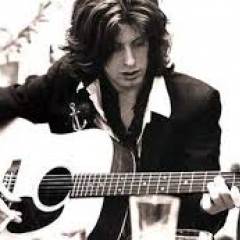 The Waterboys
 Nazareth
 The Jesus And Mary Chain
 Chvrches
 Barbara Dickson
 Ballyhoo!
 Isobel Campbell
 Cocteau Twins
 Sandi Thom
 Ac Acoustics