


Due donne, due donne, due donne.
Da quando sei sposata non è più come prima, ti trovo un po' cambiata l'amore ti rovina.
Due donne
due donne insieme nel bagno quanti consigli si danno.
Due donne
due donne si scambian le creme, forse si vogliono bene.
Due donne
due donne, una donna si specchia sa di non essere vecchia.
Due donne
due donne si guardano i seni coi loro dolci problemi.
Da quando sei sposata tra noi tutto è finito, davvero sei cambiata e poi c'è tuo marito.
Due donne, due donne, due donne.
Giorgio Gaber (pseudonym of Giorgio Gaberscik; 1937-2000) was an Italian singer-songwriter, playwright, actor, cabaret artist, guitarist and theatre director, considered one of the most important artists in Italian entertainment and music since the Second World War. Born in Milan to a family of Slovene origin, Gaber approached music at a young age, performing in Milanese venues and collaborating with some jazz musicians. In 1960 he debuted as a singer-songwriter at the Sanremo Music Festival with the song "Il mio nome è", achieving modest success. Throughout the 1960s and 1970s, Gaber established himself as one of the most original and innovative singer-songwriters on the Italian scene, characterized by committed lyrics and experimental musicality. He collaborated with various artists, including Enzo Jannacci and Gino Paoli, and participated in numerous music festivals. Among his most representative songs are "La canzone del sole", "Il mio amico", "L'uomo che non c'è" and "Non ho paura". Gaber also dedicated himself to theatre direction, staging both his own works and those of other authors. His artistic career was marked by a strong social and political commitment, expressed through his songs and theatrical performances. Giorgio Gaber died in Milan in 2000 at the age of 63.

 Sona Mahapatra
 Senit
 Gentlemen'S Riot
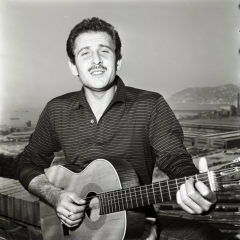 Domenico Modugno
 Marsh Mallows
 Mameli
 Lyricalz
 Schola Cantorum
 Maxneri
 Marco Gianfranceschi
 Key Bianco
 Roberta Bonanno